Beggars Opera
Band members Related acts
|
line up 1 (1969-70) - Ricky Gardiner (RIP 2022) -- lead vocals, lead guitar - Martin Griffiths -- lead vocals, percussion - Marshal Erskine -- bass, flute - Alan Park -- keyboards - Raymond Wilson -- drums, percussion
line up 2 (1971-72) - Ricky Gardiner (RIP 2022)-- lead vocals, lead guitar - Martin Griffiths -- lead vocals, percussion - Alan Park -- keyboards NEW - Virginia Scott -- synthesizers, backing vocals - Raymond Wilson -- drums, percussion
line up 3 (1972) - Ricky Gardiner (RIP 2022) -- lead vocals, lead guitar - Martin Griffiths -- lead vocals, percussion - Alan Park -- keyboards NEW - Gordon Sellar -- bass, vocals (replaced Marshal Erskine), - Raymond Wilson -- drums, percussion
line up 4 (1973-74) - Ricky Gardiner (RIP 2022) -- lead guitar, vocals - Alan Park -- keyboards, 1969-?), - Gordon Sellar -- bass, backing vocals, NEW - Linnie Patterson -- lead vocals (replaced Martin Griffiths) NEW - Colin Fairlie -- drums, percussion (replaced Raymond Wilson)
supporting musicians: - Virginia Scott -- synthesizers, backing vocals
line up 5 (1974-75) - Ricky Gardiner -- lead guitar, bass, vocals NEW - Pete Scott -- vocals (replaced Linnie Patterson) NEW - Virginia Scott -- synthesizers, backing vocals (replaced Alan Park) NEW - Mike Travis -- drums and percussion (replaced Colin Fairlie)
line up 6 (1975) NEW - Clem Cattini -- drums, percussion (replaced Mike Travis) - Ricky Gardiner (RIP 2022) -- lead guitar, vocals - Pete Scott -- vocals - Virginia Scott -- synthesizers, backing vocals
|
- Alias (Martin Griffiths) - Amazin' Blazin' Brothers (Marshall Erskine) - The Jack Anderson Band - The Argonauts - Auschwitz - The Band (Ricky Gardiner) - The Bliss Band (Alan Parker) - The Alan Bown Set (Gordon Neville) - The Tony Crane Band - Dragonfly (Gordon Neville) - Jango Edwards & Friends Roadshow (Marshall Erskine) - Joe Fagin - Fatherhood - The Feramones - The Flood - Friends (Marshall Erskine) - Gilgamesh (Mike Travis) - Martin Griffiths (solo efforts) - The Harlem Shuffle - The Alex Harvey Band (Gordon Sellar) - Jim Kelly (Gordon Sellar) - The Denny Laine Band (Gordon Sellar) - Manfred Mann's Earth Band - McCulloch Park (Alan Parker) - Leslie McKeowen & Egotrip - Gordon Neville & Friends - The New Band - New London Chorale (Gordon Neville) - Ronnie Paisley Band - Linnie Patterson (solo efforts) - Poor Genetic Material ( Martin Griffiths) - Ian Pop - Precious Life - The Projection (Gordon Sellar and Gordon Neville) - The Retros (Gordon Sellar) - Roadshow (Marshall Erskine) - The Spoilers - String Drive Thing (Colin Fairlie) - The System - Tiger - The Vipers - The Vostocks - Rick Wakeman - Writing On the Wall (Linnie Patterson)
|
|
Genre: progressive Rating: 4 stars **** Title: Act One Company: Verve Catalog: V6-5080 Year: 1972 Country/State: Glasgow, Scotland Grade (cover/record): VG+/VG+ Comments: gatefold sleeve; small punch hole Available: 1 Catalog ID: 30967 Price: $100.00
Best time to play:
|
e.
"Act One" track listing: 1.) POet and Peasant (Suppe - arranged by Beggars Opera) - 7:10 2.) Passcaglia (Erskin - Scott) - 7:04 3.) Memory (Erskin - Scott) - 7:04
(side
2) 2.) Light Calvary (Suppe - arranged by Beggars Opera) - 11;57
|
|
Genre: progressive Rating: 4 stars **** Title: Waters of Change Company: Vertigo Catalog: 6360 054 Year: 1972 Country/State: Glasgow, Scotland Grade (cover/record): VG+/VG+ Comments: gatefold sleeve Available: 1 Catalog ID: 267 Price: $110.00
Best time to play: Rainy Sunday mornings; preferably when you don't have a hangover
|
While I liked the debut Beggars Opera LP, I found "Act One" a bit heavy on the classical influences and the pretense factor. Against that backdrop, 1972's "Waters of Change" reflected a nice change of pace. Yeah, there were still dollops of classical influences scattered throughout the album ('Silver Peacock Intro'), but this time around the project came off as more of group effort with Park's excesses reigned in and the band staking out a far more original and commercial approach. Tracks like 'Time Machine' and 'Silver Peacock' were certainly progressive in sound and approach, but the band members (including synthesizer player Karen Scott who'd been made a full member after participating on the debut), all seemed to have an appreciation for openness and commercial potential. Speaking of pretense, this is going to sound dweeby, but integrating Scott in the band gave them a much fuller sound with the combination of her mellotron and keyboardist Alan Park generating some beautiful fills throughout the album. The collection also introduced new bass player Gordon Sellar who took over from Marshall Erskine.
Another one of those albums that grows on you and the overall album is far better than the individual songs.
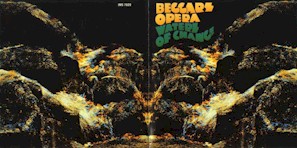
full album sleeve
"Waters of
Change" track listing: 1.) Time Machine (Alan Park - Ricky Gardiner - Martin Griffiths) - 8:06 rating: **** stars So what to say about the opener 'Time Machine'? It took a moment to shake its way out of the opening aural clutter, but once it emerged, I loved the intricate mellotron powered renaissance melody which sounded like Jethro Tull having just finished a masters thesis in classical music. Throw in some first rate lead guitar from Ricky Gardiner; a touch of Procol Harum-styled organ from Alan Park and this had the makings of a fantastic rock-meets-progressive number. And it was good, but would have been even better were if not for Martin Griffiths' leering vocals. There was just something in his clipped delivery that irritated me beyond words In spite of that criticism, the eight minutes when by quickly and it was easily one of the album highlights. 2.) Lament (instrumental) (Alan Park - Raymond Wilson) - 2:24 rating: **** stars Opening with some Park church organ and Raymond Wilson's martial snare drum, 'Lament' could not have been a better titled composition. Dark and forlorn, it was the perfect soundtrack for someone's funeral ... Great tune. 3.) I've No Idea (Alan Park - Martin Griffiths) - 7:42 rating: **** stars Aside from the Average White Band, you wouldn't think a Scottish progressive band could get funky ... okay I'm using the term loosely. Still, when it got going 'I've No Idea' connected a couple of killer hooks and generated quite a bit of energy. Thee interplay between Park's keyboards and Gardiner's guitar was particularly good, with the latter turning in the album's best guitar solos. Even Griffith's sleazy voice (used car anyone ?), sounded okay on this one. 4.) Nimbus (instrumental) (Ricky Gardiner - Martin Griffiths - Gordon Sellar) - 3:43 rating: *** stars A dark and slightly ominous instrumental, 'Nimbus' was actually quite pretty and would have made a nice piece of incidental film music. For me it captures the same stark and lonely feeling as Mark Knopfler's "Local Hero" soundtrack, which I consider a high compliment..
(side
2) With former bass player Marshall Erskine's sharing the writing credit and responsible for the flute solo and bass, I'm guessing 'Festival' was a leftover from the debut LP. Opening up with a nice keyboard and bass pattern (very ELP-ish), the song was a bouncy track with a strange, almost medieval feel. Easy to picture jesters bouncing around a town square performing this one (assuming they had electric instruments). The song also showcased the band's seldom heard talent for harmony vocals. Quirky, but quite nice ... 2.) Silver Peacock Intro (instrumental) (Karen Scott - Alan Park - Martin Griffiths) - 1:15 rating: ** stars After a brief narrative introduction, as the title indicated, 'Silver Peacock Intro' displayed Park's dazzlingly fast classically inspired keyboards. Nothing spectacular which made you wonder what the main track was going to sound like. 3.) Silver Peacock (Karen Scott - Alan Park - Martin Griffiths) - 6:33 rating: **** stars Luckily, in spite of some way out there lyrics, 'Silver Peacock' was one of the band's prettier, more atmospheric songs with a great melody, plenty of Scott's understated mellotron and some nice acoustic guitar from Gardiner. 4.) Impromptu (instrumental) (Karen Scott - Ricky Gardiner) - 1:08 rating: *** stars 'Impromptu' was a brief instrumental section showcasing cello and acoustic guitar. Pretty, but inconsequential. 5.) The Fox (Karen Scott - Ricky Gardiner - Martin Griffiths) - 6:52 rating: **** stars 'The Fox' offered up a strange, but fascinating mash-up of English folk, jazz-rock and progressive moves. Apparently the tale of a fox hunt (told from both the perspective of the fox and the hunters), it was actually far better than you would have expected with each member of the band given a chance to stretch out - bassist Sellar and Park were particularly good. Yeah, I felt bad for the fox.
© Scott R. Blackerby May 2024
|
|
Genre: progressive Rating: 4 stars **** Title: Pathfinder Company: Vertigo Catalog: 6360 073 Year: 1972 Country/State: Glasgow, Scotland Grade (cover/record): VG+/VG+ Comments: gatefold sleeve Available: 1 Catalog ID: 30210 Price: $200.00
|
1972 saw Beggars Opera undergo a personnel shake-up with original bassist Marshal Erskine replaced by Gordon Sellar. The band subsequently released their third studio album "Pathfinder". Self-produced, the collection found the group shifting musical direction. While the set may have lacked the thematic grandeur of their earlier catalog, the new song -oriented direction wasn't without charms. First the bad news. No idea who thought it would be a good idea to cover Jimmy Webb's 'MacArthur Park'. Even though they tried to "heavy up" the tune, it was one of those ideas that looked better on paper than in execution. Then there was the just plain goofy closer 'Mrs. Doubtfire'. The remaining six tracks covered a great deal of musical territory, but since II have pretty conventional musical tastes, I have to admit I quite enjoyed the variety. For longstanding fans the instrumental 'Stretcher' and their tribute to Joan of Arc 'The Witch' retained elements of their progressive roots, but avoided the complex wonk factor in favor of a tighter, more mainstream approach. Released as a promotional single 'Hobo' and the title track were convention, radio-friendly rockers. 'From Shark to haggis' was the album's strangest and most interesting performance, morphing from atmospheric knife fight to Scottish barn jig. Was this a classic release? Nah. There was just too much competing talent for this to be a "must own" set, but lead singer Griifths was consistently impressive (he managed to play it straight on 'MacArthur Park' and the rest of the band were consistent and tight throughout. Special? No. Enjoyable? Yes.
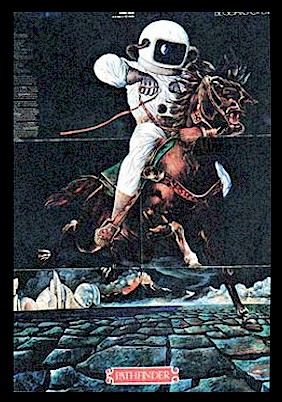
And a word about the album cover - I'm lucky enough to own an original Vertigo copy that includes the Peter Goodfellow designed cover. The thing unfolds into a stunning six panel poster that is simply stunning.
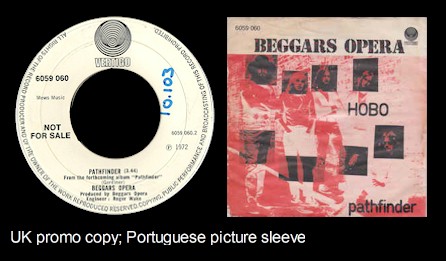
"Pathfinder" track listing: 1.) Hobo (Alan Park) - 4:40 rating: **** stars Showcasing Griffith's likeable voice and Park's keyboards, 'Hobo' started the album off with an unexpected bouncy and surprisingly commercial performance. If it was a progressive tune, it qualified for that distinction by the skin of its teeth. Taken from Griffiths' liner notes: "... the sad story of a dying tramp - the tempo lazy, almost hypnotic and then in our dreamlike state we are launched in the opening bars of Jim Webb's classic ..." On the other hand, Vertigo thought enough about the song to release it as a promotional single in the UK and a commercial 45 in the progressive hotbed of Portugal.
- 1972's 'Hobo' b/w 'Pathfinder' (Vertigo catalog number 6059 060) 2.) MacArthur Park (Richard Harris) - 8:20 rating: ** stars The Richard Harris original is one of my first radio memories and even as a kid I can remember disliking the tune. Their extended cover version didn't do much to change my mind. The Beggars Opera rendtion stayed pretty true to the original melody, complete with harpsichord fills. Griffith's somehow managed to mouth the over-the-top lyrics with busting out laughing. Griffith's comments: "A totally new approach and arrangement by the group with the addition of harpsichord and a taste of mellotron." 3.) The Witch (Virginia Scott - Ricky Gardiner) - 8:20 rating: **** stars Thanks largely to Alan Park's keyboards, 'The Witch' was the album's most progressive-sounding performance. It may also be the best tune ever written to commemorate Joan of Arc's horrific burning at the stake. A martyr at nineteen. And yes, I'll be the first to admit there's something strange when I find myself humming the refrain "we burned her at the stake, forgive us our mistake". "A blood curdling scream sets the scene for the last track, first side -- a tale from the dark past of witch burning - a track not the be heard last thing at night."
(side 2) 1.) Pathfnder (Ricky Gardiner) - 5:26 rating: *** stars Penned by lead guitarist Gardiner, the title track has always reminded me of something out of the Deep Purple catalog. I'm a Deep Purple fan so that comparison didn't bother me, though I'm not sure the band's original progressive cadre were as enthralled by their new musical direction. Gardiner turned in some nice lead guitar on this one. "True to its name, it is totally different from anything Beggars Opera have done before." 2.) From Shark To Haggis (Virginia Scott - Ricky Gardiner) - 6:38 rating: **** stars Am I the only listener who feels like they've stumbled into a West Side Story knife fight between The Jets and The Sharks? Very atmospheric with Gardiner turning in a killer guitar solo that out of the blue transitions the song into a Celtic jig. Nice tribute to their Scottish roots, but talk about an abrupt change in direction ... "... strange name, but listen -- as the number unfolds from the sly menacing mood of the Shark to the raucous Scottish jig accompanied by drunken yells - we understand." 3.) Stretcher (instrumental) (Ricky Gardiner) - 4:50 The instrumental 'Stretcher' opened with some classically-inspired Park keyboards before shifting into a platform for Gardiner to display some of his prettiest work. "The mood changes again. A corral of guitars points a relaxed sleeplike melody from which we are abruptly awakened to herald the enterance of Madame Doubtfire." 4.) Madame Doubtfire (Martin Griffiths - McFeddries - Ricky Gardiner) - 4:15 rating: ** stars Opening up with some rollicking Park organ, I have no idea if 'Madame Doubtfire' was intended to scare the crap out of listeners, or make them laugh themselves silly. I guess it had some sort of satanic theme ("sister of Satan"), but the over-the-top meltdown effects that led to the song's final collapse have always made me think Spinal Tap. "In the studio every possible instrument was used to create thus devilised composition from sheet thunder in the toilet to an enormous bell which brings to a close an album of contrast and interest."
© Scott R. Blackerby May 2024
|
|
Genre: rock Rating: 2 stars ** Title: Get Your Dog Off of Me Company: Vertigo Catalog: 6360 090 Year: 1973 Country/State: Glasgow, Scotland Grade (cover/record): VG/VG+ Comments: cutout 'x' mark on back cover; sticker residue on cover Available: SOLD Catalog ID: SOLD 5164 Price: SOLD $15.00
|
Even though they had a fairly extensive recording catalog, Scotland's Beggars Opera remained complete unknowns to American audiences (and not all that the well known outside of their native Scotland).
The disappointing sales of 1972's "Pathfinder" saw the band begin to polarize into different camps with different artistic visions. It also saw original singer Martin Griffiths and drummer Ray Wilson tender their notices. Former Writing on the Wall singer Linnie Patterson and journeyman drummer Colin Fairley were recruited as replacements. Self-produced, 1973's "Get Your Dog Off Me!" typically gets slammed as the little more than the revamped band's creative last gasp. It clearly wasn't as original, or enjoyable as the three earlier studio sets, but it wasn't a total washout either. Patterson wasn't as immediately likeable as Griffiths had been, but his voice was just as versatile, capable of handling everything from routine boogie rockers, to more challenging arrangements. The album also benefited from the unofficial return of synthesizer player Virginia Scott to the lineup. Though she wasn't listed on the band roster, Scott received special credit in the liner notes and was responsible for two of the ten tracks ('Freestyle Ladies' and 'Morning Day'). So what did this puppy sound like? Well longstanding fans were probably appalled by the band's decision to largely abandon their earlier progressive roots in favor of a more mainstream pop and rock orientation. That opened the door to taking stabs at a wide variety of genres that never would have been contemplated in the past, including country-rock ('Get Your Dog Off of Me') , pop 'La-di-da'), and bluesy-rocker (Working Man'). Sure, artistically it was clearly a sellout, but you couldn't really blame them for a marketing decision like this one. After all, the first three LPs won critical raves, but didn't sell worth squat and musicians need to eat.
The album proved another commercial flop and the band subsequently called it quits.
"Get Your
Dog Off of Me" track listing: 1.) Get Your Dog Off of Me (Alan Park - Ainsworth) - rating: **** stars With an instantly memorable melody and nice vocal from Linnie Paterson, the title track was a top notch country-rock performance. Upbeat, funny, and highly commercial, this one should have been tapped as a single. 2.) Freestyle Ladies (Virginia Scott) - rating: ** stars Penned by Scott, 'Freestyle Ladies' was a pedestrian boogie rocker number. I've certainly heard worse, but this one just lacked much in the originality. Ricky Gardiner's guitar was probably the best thing on the album. 3.) Open Letter (Robert Smith) - rating: **** stars One of the standout tracks, 'Open Letter' was a mid-tempo rocker with a great melody and wonderful harmony vocals. Paterson rough hewn voice shone on this one, while Scott's voice was clearly heard on backing chorus. Very nice. 4.) Morning Day (Virginia Scott) - rating: *** stars Scott's second contribution, 'Morning Day' opened up with a nice Gordon Sellar bass pattern and unfolded into a decent country-rock number. Pretty melody with some nice group harmonies on the chorus. 5.) Requiem (instrumental) (Ricky Gardiner) - rating: *** stars One of the few nods to their past, side one close with the atmospheric instrumental 'Requiem' . Written by Gardiner, the track also showcased his arching guitar. Beautiful performance, but it was very short.
(side
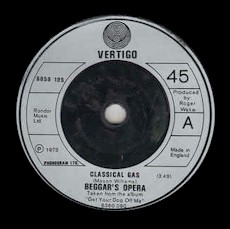
2) Slowed down and given a classical edge with the addition of Alan Park's harpsichord and Scott's synthesizers, their cover of Mason William's 'Classical Gas' was fun, but hardly improved on the original. It actually sounded like something that Focus might have concocted ... It was also tapped as a European single.
1974's 'Classical Gas' b/w 'Sweet Blossomed Woman' / 'Requiem' (Vertigo catalog number 6059 105)
2.) Sweet Blossom Woman (Mick Grabham) - rating: *** stars The first couple of times I heard it 'Sweet Blossom Woman' didn't do a great deal for me. To be honest, it struck me as a routine country-rock number with an ill advised dollop of synthesizers. And unexpectedly one day when I had the album on and wasn't paying all that much attention the song jumped out at me. Yeah, it was a country-rock number but the performance was exceptionally energetic and Paterson turned in one of his best vocals. 3.) Turn Your Money Green (Alan Park - Ainsworth) - rating: **** stars 'Turn Your Money Green' started out as a pretty atmospheric instrumental, before morphing into a nice Southern rock ballad. Funny to think that a Scottish band could pull that move off. Most probably couldn't do it. 4.) La-di-da (Linnie Paterson - Colin Fairlie - Alan Park - Gordon Sellar - Ricky Gardiner) - rating: **** stars The group-penned 'La-di-da ' was easily their most commercial outing. With a giddy refrain this one had everything required for top-40 success, making you scratch your head and wonder why 'Classical Gas' was tapped instead. 5.) Working Man (Gordon Sellar - Ainsworth) - rating: *** stars 'Working Man' ended the album with a nifty blues-rocker. The surprise on this one was Paterson who demonstrated a previous unheard capacity for belting it out. Taunt and tough, it was unlike anything heard on their earlier releases.
© Scott R. Blackerby May 2026
|
|
Genre: progressive Rating: *** 3 stars Title: Sagittary Company: Jupiter Catalog: 88907 OT Year: 1974 Country/State: Glasgow, Scotland Grade (cover/record): VG+/VG+ Comments: gatefold sleeve Available: 1 Catalog ID: -- Price: $80.00
|
Forgive my ignorance but I thought Beggars Opera's recording career ended with the release of 1973's "Get Your Dog Off of Me". I knew the band called it quits following that album's release, but was surprised to learn lead guitarist Ricky Gardiner quickly resurrected the nomenclature. Gardiner recruited a new lie-up consisting of vocalist Pete Scott, keyboard player Virginia Scott (who had guested on the previous album) and former Gilgamesh drummer Mike Travis resulted in another Beggars Opera album - 1974's "Sagittary". While billed as a Beggar's Opera release, for all intents and purposes the collection was a Gardiner solo album. In addition to producing and arranging the album, Gardiner handled lead guitar and co-wrote all ten tracks with Virginia Scott and Colin MacFarlane. Unable to score a contract with an English label, the revamped band signed with Ralph Siegel's Munchen, Germany based Jupiter label.
I was quite
excited to stumble across a copy of the album given it never saw an America
release making it difficult to score in the States. Sadly my initial
reaction was pure disappointment. The progressive moves and strong
performances I found so appealing on the first three albums were completely
absent on this one. Instead I heard an album that found the band
seemingly interested in demonstrating their musical versatility. Over
the first side you were subjected to a slice of mind numbin
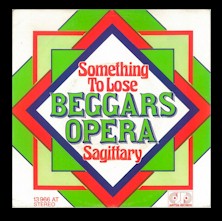
"Sagittary" track listing: (side 1) 1.) Sagittary (instrumental) (Ricky Gardiner - Virginia Scott - Colin MacFarlane) - 4:50 rating: * star Um ... Showcasing Virginia Scott on synthesizers, the instrumental title track started out sounding like the band were warming up. Unfortunately that set the tone for the entire song - namely a tuneless, seemingly endless slice of jazz-rock fusion. Shoot this wasn't what I signed up for. The song also appeared as the "B" side on their German "Something To Lose" single. 2.) Something To Lose (Ricky Gardiner - Virginia Scott - Colin MacFarlane) - 2:37 rating: ** stars Well, a bland slice of reggae was better than the opening tune, but just barely. Can't say I found Pete Scott's voice particularly appealing, though the song didn't give him much to work with. An odd choice, but the track was released as a German single:
- 1974's "Something To Lose" b/w "Sagittary" (Jupiter catalog number 13 966 AT)
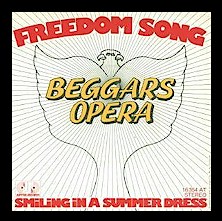
3.) World Crisis Blues (Ricky Gardiner - Virginia Scott - Colin MacFarlane) - 3:54 rating: *** stars Well, in terms of lyrics, or music the blues-rocker "World Crises Blues" wasn't any great shakes. Still, compared to the two previous selections it came as a welcomed improvement and guitarist Gardiner turned in a nice end-of-song solo. Kind of a mid-career Robin Trower feel here. 4.) Smiling In a Summer Dress (Ricky Gardiner - Virginia Scott - Colin MacFarlane) - 2:36 rating: **** stars With a slinky melody and a nice lead vocal from Scott, "Smiling In a Summer Dress" was the first song that even remotely reminded me of the band's earlier sound. For some reason the underlying melody has always reminded me of George Harrison's "While My Guitar Weeps". The song also appeared as the "B" side on their "Freedom Song" 45. 5.) Freedom Song (Ricky Gardiner - Virginia Scott - Colin MacFarlane) - 4:03 rating: ** stars Hum. The percussion heavy "Freedom Song" sounded like the band had been listening to more than their share of dance music. Combining activist lyrics "give us freedom ... I swear we're going to have to take it" with a funky vibe didn't exactly leave me in awe . Who knows why, but the track was released as the album's second German single:
- 1975's "Freedom Song" b/w "Smiling In a Summer Dress" (Jupiter catalog number 15 354 AT)
(side 2) 1.) I'm The Music Man (Ricky Gardiner - Virginia Scott - Colin MacFarlane) - 2:52 rating: **** stars On "I'm the Music Man" Gardiner's opening guitar moves have always reminded me of the tone David Gilmour captures. Combined with the album's strongest melody and Scott's best vocal performance made this the album's standout performance. This should have been floated as the album's single. 2.) Just Twenty One (Ricky Gardiner - Virginia Scott - Colin MacFarlane) - 3:19 rating: *** stars The album's most conventional and mainstream rocker, "Just Twenty One" would not have sounded bad on an AOR radio station. Exhibiting a touch of classical influences Gardiner turned in one of his solos. Shame it ended so soon. 3.) Jack The Ripper (Ricky Gardiner - Virginia Scott - Colin MacFarlane) - 2:58 rating: ** stars Time after time I've seen this album categorized as progressive. I just don't get it. I challenge anyone to highlight a progressive song on the album. Sporting an extended chorus consisting of endless "do-do-do-do-do-dos" "Jack the Ripper" certainly isn't progressive fodder. 4.) Love of My Own (Ricky Gardiner - Virginia Scott - Colin MacFarlane) - 4:23 rating: *** stars Strange, but even though there were no horns, Scott's howling vocals on "Love of My Own" reminded me of David Clayton Thomas of Blood, Sweat & Tears fame. Gardiner turned in an awesome performance on bass and lead guitar, making this the album's most pop oriented performance. The track would have made a better single than the tracks Jupiter released. 5.) Simplicity (instrumental) (Ricky Gardiner - Virginia Scott - Colin MacFarlane) - 2:52 rating: *** stars Showcasing Virginia Scott's '70s synthesizer fills the instrumental "Simplicity" had a nice enough melody, but the song just sounded unfinished.
© Scott R. Blackerby May 2026
|


 g
jazz-rock fusion (the title track), forgettable 10cc-styled reggae
("Something To Lose"), anonymous blues-rock
("World Crisis Blues")
and an activist dance rock track ("Freedom Song"). Side two
was only marginally better. It was a tough slog for; even worse given
my high hopes. After three of four spins I just gave up on this one and set
it aside to resell. A family move got in the way and the LP sat in
storage for a couple years. Stumbling across it I couldn't remember
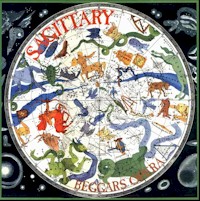
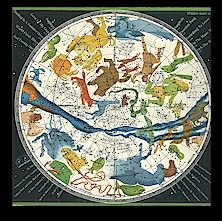
much about it other than the Mouche Vormstein designed cover was kind of
cool. The good news is revisiting the album revealed it was better
than I remembered. Nah, it wasn't close to the first three LPs, but it
had a couple of decent performances. With the exception of "Smiling
In a Summer Dress" (which still reminded me of George Harrison's
"While My Guitar Weeps", side one was still a complete waste. Side
two was inconsistent, but far stronger. "I'm The Music Man" and
"Just Twenty One" were easily the most conventional and enjoyable
performances, followed by "Love of My Own" and the closing
instrumental "Simplicity". All told it was a professional,
if not particularly memorable listening experience.
g
jazz-rock fusion (the title track), forgettable 10cc-styled reggae
("Something To Lose"), anonymous blues-rock
("World Crisis Blues")
and an activist dance rock track ("Freedom Song"). Side two
was only marginally better. It was a tough slog for; even worse given
my high hopes. After three of four spins I just gave up on this one and set
it aside to resell. A family move got in the way and the LP sat in
storage for a couple years. Stumbling across it I couldn't remember
much about it other than the Mouche Vormstein designed cover was kind of
cool. The good news is revisiting the album revealed it was better
than I remembered. Nah, it wasn't close to the first three LPs, but it
had a couple of decent performances. With the exception of "Smiling
In a Summer Dress" (which still reminded me of George Harrison's
"While My Guitar Weeps", side one was still a complete waste. Side
two was inconsistent, but far stronger. "I'm The Music Man" and
"Just Twenty One" were easily the most conventional and enjoyable
performances, followed by "Love of My Own" and the closing
instrumental "Simplicity". All told it was a professional,
if not particularly memorable listening experience.